
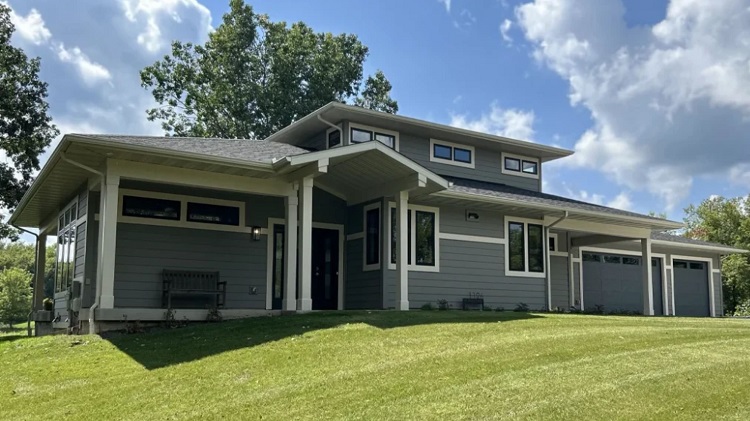
Choosing the right exterior siding is essential for protecting a home against extreme weather. Heavy rain, strong winds, hail, intense sunlight, freezing temperatures, and high humidity can all damage exterior walls when the siding system is poorly selected or incorrectly installed. For homeowners, choosing durable siding can help reduce maintenance expenses, prevent moisture intrusion, and preserve property value over time.
However, no single siding material performs best under every weather condition. Fiber cement siding is known for its durability and resistance to many environmental hazards, metal siding can provide excellent protection when properly specified, and high-quality vinyl siding offers a relatively affordable option for many homes. Engineered wood and brick veneer can also perform well when installed with appropriate moisture management and structural details.
The best choice depends on your local climate, the home's construction, your budget, and the type of weather exposure you need to address. This guide compares the best exterior siding options for extreme weather, explains their costs and maintenance requirements, and provides practical advice for selecting a siding system that protects your home for years to come.
What Is Exterior Siding and Why Does Weather Resistance Matter?
Exterior siding is the protective and decorative material installed on the outside walls of a building. It helps shield the wall assembly from rain, wind, sunlight, and other environmental conditions while contributing to the home's appearance and energy performance.
Siding is not necessarily the building's primary waterproof barrier. Most well-designed wall assemblies rely on several components working together, including exterior cladding, flashing, a water-resistive barrier, properly detailed openings, and drainage pathways.
When these components are installed correctly, they help manage water and reduce the risk of damage to the underlying structure.
Common Weather-Related Risks for Exterior Walls
Different climates create different challenges for siding systems.
-
Strong winds: Can loosen panels, pull fasteners out, or damage improperly installed siding.
-
Heavy rainfall: Can allow moisture to enter through joints, openings, and poorly detailed flashing.
-
Hail: Can dent metal, crack brittle materials, or damage some vinyl and composite products.
-
Intense sunlight: Can contribute to fading, heat-related movement, and deterioration of certain finishes.
-
Freezing temperatures: Can expose weaknesses in brittle materials and increase the consequences of trapped moisture.
-
High humidity: Can encourage mold growth on susceptible surfaces and contribute to wood deterioration when moisture remains trapped.
-
Coastal conditions: Salt exposure can accelerate corrosion in unsuitable metals and damage some coatings or fasteners.
Understanding these risks is the first step toward choosing the right siding for your property.
The Best Exterior Siding Materials for Extreme Weather
The following materials are widely used in residential construction. Their performance depends on the specific product, installation quality, maintenance, and local environmental conditions.
1. Fiber Cement Siding
Fiber cement siding is manufactured from cementitious materials, reinforcing fibers, and other ingredients. It is available in lap siding, shingles, vertical panels, and other profiles that resemble painted wood or traditional exterior cladding.
Best for: Homeowners seeking a durable exterior finish with a broad range of architectural styles.
Advantages
-
Generally resistant to rot and insect damage.
-
Noncombustible products are available.
-
Can perform well in humid environments when correctly installed and detailed.
-
Available in products designed for different climates and exposure conditions.
-
Offers a range of colors, textures, and profiles.
Potential drawbacks
-
Usually heavier than vinyl siding.
-
Cutting and installation require appropriate tools and safety precautions.
-
Damaged boards may need replacement and repainting.
-
Initial installation costs are often higher than those of basic vinyl siding.
Fiber cement can be a strong choice for homes exposed to heat, humidity, and wind, but it is not automatically waterproof. Proper flashing, clearances, joints, and water-management details remain essential.
2. Metal Siding
Metal siding commonly uses steel or aluminum panels. Products vary in thickness, protective coatings, fastening systems, and panel design.
Best for: Homeowners who want a modern appearance, durable exterior panels, and a material that does not rot.
Advantages
-
Resistant to rot and insect damage.
-
Many products provide good resistance to weather exposure.
-
Available in different finishes and profiles.
-
Can be relatively low-maintenance when the coating and installation are suitable.
-
Some systems can be repaired by replacing individual panels.
Potential drawbacks
-
Steel can corrode if its protective coating is damaged or the product is unsuitable for the environment.
-
Aluminum can dent under impact.
-
Hail may cause cosmetic damage even when the wall remains protected.
-
Poorly detailed joints can allow water intrusion.
-
Thermal expansion and contraction must be accommodated in the installation.
For coastal properties, confirm that the selected metal, coating, fasteners, and accessories are suitable for salt exposure. Corrosion resistance varies significantly between products.
3. Vinyl Siding
Vinyl siding is made primarily from polyvinyl chloride (PVC) and is widely used because of its relatively low cost and limited routine maintenance.
Best for: Homeowners seeking an affordable siding option for a climate and building design suited to the selected product.
Advantages
-
Generally costs less than fiber cement or many premium cladding systems.
-
Does not rot like untreated wood.
-
Available in many colors and profiles.
-
Does not normally require repainting.
-
Damaged sections can often be replaced individually.
Potential drawbacks
-
Can crack under certain impacts, especially in cold conditions.
-
May warp or deform under excessive heat.
-
Can be damaged by flying debris during severe storms.
-
Color and finish can change with prolonged exposure to sunlight.
-
Installation must allow for thermal expansion and contraction.
High-quality vinyl siding may be appropriate for many residential properties, but homeowners in hail-prone or high-wind regions should pay close attention to product ratings, fastening requirements, and installation instructions.
4. Brick Veneer
Brick veneer is a nonstructural exterior masonry cladding installed over a supporting wall assembly. Although it resembles solid brick construction, brick veneer generally relies on the underlying structure for support.
Best for: Homeowners seeking a traditional masonry appearance and a durable exterior finish.
Advantages
-
Resistant to rot and insect damage.
-
Noncombustible.
-
Can provide long service life when properly constructed.
-
Requires relatively little routine surface maintenance.
-
Offers strong resistance to many forms of everyday impact.
Potential drawbacks
-
Initial construction costs can be high.
-
Requires suitable structural support and foundation details.
-
Mortar joints may need repair over time.
-
Water management and drainage details are essential.
-
Masonry can crack if movement or foundation problems are not addressed.
Brick veneer is not automatically waterproof. Proper flashing, weep provisions, drainage cavities, and moisture management are important for preventing water from becoming trapped behind the masonry.
5. Engineered Wood Siding
Engineered wood siding is manufactured from wood fibers or other wood-based materials combined with binders and protective treatments. Products are designed to provide the appearance of traditional wood siding with specific performance characteristics.
Best for: Homeowners who want a wood-like appearance without choosing conventional solid wood boards.
Advantages
-
Available in traditional lap, panel, and board-and-batten styles.
-
Can offer a lower weight than some masonry or cementitious materials.
-
May cost less than certain premium siding systems.
-
Some products include factory-applied finishes.
-
Can provide an attractive appearance when maintained properly.
Potential drawbacks
-
Vulnerable to moisture damage if water enters through damaged finishes or improperly detailed joints.
-
Cut edges and clearances may require special attention.
-
Painting and maintenance requirements vary by product.
-
Performance depends heavily on installation quality and manufacturer specifications.
For homes exposed to persistent rain or high humidity, follow the manufacturer's requirements for ground clearance, edge sealing, flashing, and repainting.
6. Natural Wood Siding
Natural wood siding remains popular for traditional, rustic, and custom homes. Common choices include cedar and other suitable wood species.
Best for: Homeowners who value natural appearance and are prepared to maintain the exterior regularly.
Advantages
-
Natural texture and appearance.
-
Can be repaired by replacing damaged boards.
-
Available in many profiles and finishes.
-
Suitable for a wide range of architectural designs.
Potential drawbacks
-
Requires maintenance to protect against moisture and sunlight.
-
Can rot or attract insects if poorly maintained.
-
Paint and stain may need periodic renewal.
-
Fire performance depends on the wood, treatment, assembly, and local requirements.
Wood siding can perform well in demanding climates, but its long-term condition depends on moisture control, drainage, finish maintenance, and the suitability of the wood for the exposure.
Comparing Siding Options for Extreme Weather
The following table summarizes common strengths and limitations. Actual performance varies by product and installation.
| Siding Material | Strong Winds | Heavy Rain | Hail and Impact | Humidity | Fire Resistance |
|---|---|---|---|---|---|
| Fiber cement | Depends on product and fastening | Good with proper detailing | Can crack or chip under impact | Generally resistant to rot | Noncombustible products available |
| Metal | Depends on panel and attachment system | Good with properly detailed joints | Some panels dent | Generally resistant to rot; corrosion is possible | Noncombustible metal |
| Vinyl | Depends on product and installation | Requires correctly detailed wall assembly | Some products can crack | Does not rot, but trapped moisture remains a concern | Combustible plastic material |
| Brick veneer | Durable when properly constructed | Requires drainage and flashing | Generally resistant to everyday impact | Durable, but moisture management is essential | Noncombustible masonry |
| Engineered wood | Depends on product and fastening | Requires careful moisture protection | Varies by product | Vulnerable if moisture protection fails | Depends on product and assembly |
| Natural wood | Depends on design and fastening | Requires effective moisture management | Can dent or split | Requires protection against moisture and decay | Combustible unless specially treated |
No siding material should be considered hurricane-proof, hail-proof, or completely waterproof based on its material category alone. Look for documented performance ratings and installation requirements for the specific product.
Best Exterior Siding for Different Weather Conditions
The most suitable siding depends on the dominant hazards in your region.
Best Siding for High-Wind Areas
Fiber cement, metal, and other properly tested siding systems may be suitable for high-wind locations when installed according to the product's requirements.
Important considerations include:
-
Wind-pressure ratings for the selected product.
-
Fastener type, spacing, and attachment to the supporting structure.
-
Corner and edge detailing.
-
Proper installation around windows and doors.
-
Compliance with applicable local building requirements.
In hurricane-prone regions, the entire exterior envelope matters. Roof connections, windows, doors, garage doors, and wall sheathing all contribute to overall building performance.
Do not assume that choosing a particular siding material alone will protect the home from hurricane damage.
Best Siding for Heavy Rain and Humid Climates
Fiber cement, metal, vinyl, and masonry cladding can all be appropriate when the wall assembly is designed to manage moisture.
The critical factors include:
-
A properly installed water-resistive barrier.
-
Correct flashing above windows and doors.
-
Properly detailed wall penetrations.
-
Suitable clearances above soil and roofing surfaces.
-
Effective drainage and drying pathways.
-
Prompt repair of damaged caulking or finishes where specified.
In humid climates, preventing water from becoming trapped behind the siding is often more important than choosing a material advertised as waterproof.
Best Siding for Hail-Prone Regions
Hail resistance depends on the product's thickness, composition, impact characteristics, and installation.
Some metal panels may dent, while vinyl siding may crack and fiber cement may chip or fracture under severe impact.
When hail is a major concern, ask manufacturers and contractors for documented impact-performance information. Review any relevant insurance requirements before choosing the product.
Best Siding for Hot, Sunny Climates
Intense sunlight can contribute to fading, surface deterioration, and thermal movement.
For hot climates, compare:
-
UV resistance and finish warranties.
-
Color stability.
-
Thermal expansion requirements.
-
Reflective or light-colored finish options.
-
The siding's compatibility with wall insulation and ventilation strategies.
Vinyl siding requires sufficient space for thermal movement, while metal siding must be detailed to accommodate expansion and contraction. Fiber cement and engineered wood also require appropriate finish maintenance.
Best Siding for Cold and Freezing Climates
In freezing climates, moisture management is especially important. Water that enters cracks or becomes trapped within a wall assembly can contribute to deterioration.
Homeowners should consider:
-
Resistance to impact at low temperatures.
-
Proper drainage and flashing.
-
Appropriate wall insulation.
-
Air leakage and condensation control.
-
Local snow, ice, and wind exposure.
-
Manufacturer-approved installation temperatures and methods.
A well-designed wall assembly can be more important than choosing a single supposedly weatherproof material.
Best Siding for Coastal Homes
Coastal properties face a combination of salt exposure, wind, moisture, and sometimes intense sunlight.
Metal siding may be appropriate when its alloy, coating, and fasteners are selected for the environment. Fiber cement and suitable masonry systems are other options worth evaluating.
For any material, confirm the manufacturer's coastal-exposure recommendations. Standard steel fasteners or unsuitable coatings may deteriorate more quickly in salt-laden air.
How Much Does Exterior Siding Cost?
Siding costs vary according to material, labor, wall area, building height, removal of existing siding, insulation upgrades, and the complexity of windows, doors, corners, and architectural details.
The following figures are broad U.S. budgeting estimates for installed siding, not verified quotes for every market in 2026.
| Siding Material | Illustrative Installed Cost per Square Foot |
|---|---|
| Vinyl siding | $3–$12 |
| Engineered wood siding | $4–$12 |
| Fiber cement siding | $5–$14 |
| Metal siding | $5–$16 |
| Natural wood siding | $6–$15 |
| Brick veneer | $8–$25 or more |
Actual prices can fall outside these ranges, particularly for premium products, complex architectural designs, or extensive wall repairs.
Example: Estimating Siding Replacement Costs
Suppose a home has 2,000 square feet of exterior wall area to be covered. If a selected siding system costs an assumed $8 per square foot installed, the preliminary estimate would be:
2,000 square feet × $8 = $16,000
This is an illustrative calculation, not a contractor quote. It assumes the installed rate applies to the measured wall area and does not establish whether removal, insulation, repairs, permits, or other extras are included.
Before approving the project, request an itemized estimate showing material quantities, labor, removal and disposal, moisture-barrier work, flashing, trim, and potential repairs.
How to Choose Weather-Resistant Siding Without Overspending
A durable siding system does not have to be the most expensive option available. The goal is to select a product that meets your property's weather requirements without paying for unnecessary features.
1. Identify Your Main Weather Risks
Determine whether your home is most exposed to strong winds, hail, heavy rain, humidity, extreme temperatures, or coastal salt.
A product suitable for a hot, dry region may not be the best option for a wet, windy coastline.
2. Compare Complete Installation Quotes
Obtain multiple written estimates when practical. Make sure each contractor quotes the same general scope of work, including removal, flashing, moisture protection, trim, and cleanup.
A lower price may exclude important components needed for weather resistance.
3. Ask for Product Documentation
Request manufacturer installation instructions, warranty details, maintenance recommendations, and any relevant wind, impact, fire, or moisture-performance information.
Avoid relying on broad marketing statements that a product is indestructible or suitable for every climate.
4. Evaluate Long-Term Maintenance
Consider the cost of repainting, cleaning, repairing impact damage, replacing panels, and maintaining protective finishes.
A lower initial price may not result in the lowest lifetime cost if the siding needs frequent repairs.
5. Avoid Removing Essential Wall Protection
Do not cut costs by eliminating required flashing, water-resistive barriers, drainage provisions, or other components specified for the wall assembly.
These details help protect the structure behind the visible siding and can prevent expensive moisture damage.
Does Exterior Siding Improve Energy Efficiency?
Exterior siding can contribute to energy performance, but siding alone is not usually the main source of a home's insulation.
The overall wall assembly includes framing, insulation, air barriers, moisture-control layers, sheathing, and exterior cladding. All these components influence heat transfer and moisture movement.
Insulated Vinyl Siding
Some vinyl siding systems include an attached insulation layer. Depending on the product and installation, this may improve the wall's thermal performance and help reduce certain thermal irregularities.
However, insulated siding does not automatically eliminate the need for properly designed wall insulation or air sealing.
Fiber Cement and Metal Siding
Fiber cement and metal siding are primarily exterior cladding materials rather than complete insulation systems.
Their contribution to energy performance depends on the insulation and other components behind them. Metal cladding can also require careful detailing to manage thermal movement and moisture.
What Homeowners Should Prioritize
If reducing heating and cooling costs is a major goal, evaluate the entire exterior wall system.
Consider:
-
Insulation levels and continuity.
-
Air leakage around windows, doors, and wall penetrations.
-
Moisture control and ventilation where appropriate.
-
Reflective or light-colored finishes when suitable.
-
Professional assessment of the building envelope.
Improving insulation and air sealing may provide more substantial energy benefits than replacing siding alone, depending on the home's existing condition.
Siding Maintenance Tips for Long-Term Durability
Routine inspections help identify damage before it develops into a larger problem.
Fiber Cement Maintenance
-
Inspect paint and factory finishes for deterioration.
-
Check joints and flashing for signs of water intrusion.
-
Replace damaged boards promptly.
-
Maintain manufacturer-required clearances.
-
Follow the specified repainting and cleaning instructions.
Metal Siding Maintenance
-
Inspect panels for dents, loose fasteners, and corrosion.
-
Check protective coatings for scratches or deterioration.
-
Keep drainage paths clear.
-
Inspect joints, flashing, and sealants where applicable.
-
Use cleaning products approved for the selected finish.
Vinyl Siding Maintenance
-
Inspect panels for cracks, looseness, or warping.
-
Check areas around windows and doors.
-
Clean surfaces using manufacturer-approved methods.
-
Avoid heat sources that could deform the panels.
-
Replace damaged sections before water reaches vulnerable wall components.
Wood and Engineered Wood Maintenance
-
Inspect painted or stained surfaces regularly.
-
Check cut edges, joints, and bottom clearances.
-
Repair damaged finishes according to the product instructions.
-
Look for signs of swelling, rot, or insect activity.
-
Correct water-management problems promptly.
Brick Veneer Maintenance
-
Inspect mortar joints for deterioration.
-
Keep weep openings clear where present.
-
Check flashing and drainage details when accessible.
-
Investigate cracks that may indicate movement.
-
Arrange professional assessment if water intrusion occurs.
For every siding system, inspect the exterior after significant storms and address damage promptly.
Common Mistakes to Avoid When Choosing Exterior Siding
Choosing Based Only on Appearance
A siding material may look attractive but perform poorly if it is unsuitable for the local climate or the home's wall assembly.
Evaluate durability, maintenance, installation requirements, and weather exposure alongside appearance.
Assuming Siding Is Completely Waterproof
Most siding systems are designed as part of a larger wall assembly. Water can enter through joints, penetrations, and poorly detailed openings.
Correct flashing, moisture barriers, drainage, and installation details are essential.
Hiring an Inexperienced Contractor
Poor fastening, incorrect clearances, inadequate flashing, or unsuitable sealants can cause premature failures.
Choose a contractor with experience installing the specific siding system and request references for similar projects.
Ignoring Manufacturer Instructions
Different products have different requirements for fasteners, spacing, expansion, clearances, and finishing.
Using the wrong installation method may affect both performance and warranty coverage.
Failing to Check Local Requirements
Building regulations, fire-safety provisions, and wind-related requirements vary by jurisdiction and building type.
Confirm the applicable requirements before ordering materials or beginning installation.
How to Choose a Reliable Siding Contractor
The quality of installation has a major influence on weather resistance and long-term maintenance costs.
Before signing a contract, check that the contractor:
-
Holds any required local license or registration.
-
Has appropriate liability insurance and workers' compensation coverage where applicable.
-
Provides a detailed written estimate.
-
Has experience with the selected material.
-
Explains flashing and moisture-management details.
-
Follows the manufacturer's installation instructions.
-
Provides written workmanship warranty terms.
-
Explains how hidden wall damage will be handled.
-
Identifies responsibility for permits, debris removal, and cleanup.
Ask for a written description of the wall assembly, including the water-resistive barrier, flashing, trim, and other relevant components.
If the project involves significant structural damage or persistent moisture, consider having the wall assembly evaluated by a qualified building professional before installing new siding.
Frequently Asked Questions
What is the best exterior siding for extreme weather?
There is no single best option for every climate. Fiber cement, metal, vinyl, brick veneer, and other systems can all perform well when the specific product is suitable for the environment and correctly installed. The best choice depends on the dominant weather risks, budget, maintenance expectations, and building design.
Which siding is best for hurricane-prone areas?
Choose a siding system with documented performance appropriate for the expected wind conditions and install it according to the manufacturer's specifications and applicable building requirements. Fiber cement and metal systems may be suitable in certain applications, but attachment details and the overall building envelope are equally important.
Is fiber cement siding better than vinyl siding?
Fiber cement generally offers different strengths, including resistance to rot and the availability of noncombustible products. Vinyl is often less expensive and requires relatively little routine maintenance. Fiber cement typically costs more to install and may require repainting, while vinyl can crack or deform under certain impact and temperature conditions.
The better option depends on climate, product quality, installation, and budget.
Which siding is best for heavy rain?
Several materials can work well in rainy climates when installed as part of a properly detailed wall assembly. Effective flashing, a water-resistive barrier, drainage provisions, and appropriate clearances are essential regardless of the visible siding material.
Does metal siding rust?
Steel siding can corrode if its protective coating is damaged or the product is unsuitable for the exposure. Aluminum does not rust in the same way as iron-based metals, but it can still experience corrosion or finish deterioration under certain conditions. Product selection and maintenance are important, especially near the coast.
Does new siding increase home value?
New siding can improve curb appeal, address visible deterioration, and make a home more attractive to buyers. However, the financial return is not guaranteed and depends on the local housing market, project cost, material selection, and the property's condition.
How often should exterior siding be inspected?
Inspect siding periodically and after significant storms. The appropriate maintenance schedule depends on the material, local climate, manufacturer recommendations, and the condition of the existing exterior. Look for loose panels, cracks, deteriorating finishes, damaged flashing, and signs of moisture intrusion.
Can new siding reduce energy bills?
It may contribute to improved energy performance when combined with suitable insulation, air sealing, and moisture management. Replacing siding alone does not guarantee lower energy bills. The result depends on the existing wall assembly and the upgrades included in the project.
Conclusion
The best exterior siding options for extreme weather are those that match your climate, building design, and maintenance budget while providing reliable protection when properly installed.
Fiber cement can be a strong choice for homeowners seeking durability and a range of exterior styles. Metal siding offers a durable alternative when the material, coating, and fastening system are appropriate for the environment. Vinyl siding can provide a cost-effective solution, while brick veneer, engineered wood, and natural wood offer other benefits for suitable properties.
Before making a decision, compare complete installation quotes, examine product performance documentation, and make sure the wall assembly includes appropriate moisture protection and flashing. The cheapest siding is not necessarily the most economical over time, and the most expensive product is not automatically the most suitable.
Ultimately, a well-designed and professionally installed siding system can help protect your home from harsh weather, limit avoidable maintenance expenses, and preserve its appearance and value for years to come.

