
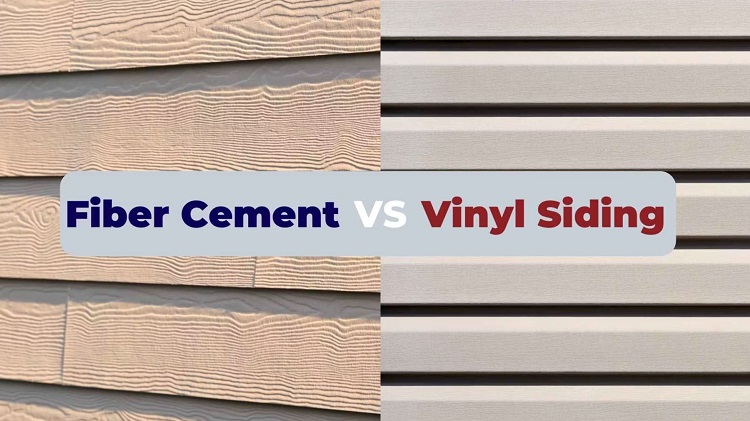
Choosing the right exterior siding can make a significant difference in a home's appearance, durability, maintenance requirements, and resale appeal. For homeowners planning an exterior renovation, two popular options are vinyl siding and fiber cement siding. Both can improve curb appeal, protect exterior walls, and help maintain a property's condition, but they differ in installation costs, long-term maintenance, and potential return on investment.
Vinyl siding is often attractive to homeowners looking for an affordable exterior upgrade with relatively low maintenance requirements. Fiber cement siding generally costs more upfront but offers a different appearance, substantial resistance to many common exterior hazards, and design options that can resemble traditional wood siding.
So, which option adds more home value? The answer depends on the local housing market, the home's architectural style, the quality of installation, the condition of the existing exterior, and how much buyers in your area value durability and appearance.
This guide compares vinyl siding and fiber cement siding across installation costs, maintenance, durability, energy performance, warranties, and resale considerations to help homeowners choose the best exterior improvement for their budget.
Vinyl Siding vs Fiber Cement: Quick Comparison
Before evaluating home value, it helps to understand how these two siding materials differ.
| Feature | Vinyl Siding | Fiber Cement Siding |
|---|---|---|
| Primary materials | PVC-based plastic | Cement, sand, cellulose fibers, and other formulation ingredients |
| Initial installation cost | Generally lower | Generally higher |
| Maintenance | Usually relatively low | Requires attention to paint and joint details, depending on product |
| Appearance | Wide selection of colors and profiles | Can resemble wood siding, shingles, and other traditional styles |
| Moisture resistance | Does not rot, but water can enter behind improperly installed siding | Resists rot and many pests, but installation and moisture management remain essential |
| Fire performance | Can melt or deform under heat | Generally noncombustible, subject to the product and assembly specifications |
| Impact resistance | Can crack or dent under certain impacts | Can crack or chip under impact |
| Painting | Some products can be painted according to manufacturer instructions | Many products require painting or factory-applied finishes |
| Installation | Often faster and less labor-intensive | Typically requires specialized cutting, handling, and fastening practices |
| Resale appeal | Often attractive to budget-conscious buyers | May appeal to buyers seeking a traditional, substantial exterior finish |
Neither siding material automatically increases a home's resale price. Buyers generally evaluate the overall condition of the property, the quality of the renovation, neighborhood standards, and the amount of maintenance likely to be required.
What Is Vinyl Siding?
Vinyl siding is an exterior cladding material made primarily from polyvinyl chloride, commonly known as PVC. It is installed in overlapping panels or other profiles designed to protect exterior walls from direct weather exposure while providing a finished appearance.
Vinyl siding is popular in many parts of the United States because it is available in numerous colors, textures, and styles and generally requires less routine maintenance than traditional painted wood siding.
Advantages of Vinyl Siding
1. Lower upfront cost
Vinyl siding is often one of the more affordable exterior cladding options. This can make it attractive when renovating a large house or updating an older property before selling.
2. Relatively low maintenance
Vinyl does not require routine repainting in the same way that painted wood siding does. Periodic cleaning and inspections are still necessary.
3. Wide design selection
Homeowners can choose from traditional horizontal lap siding, vertical profiles, shake-style panels, and different colors and textures.
4. Resistance to rot and insects
Because vinyl is a plastic material, it does not rot like wood. However, the wall assembly behind it can still suffer moisture damage if water gets behind the siding and cannot drain or dry properly.
5. Relatively straightforward repairs
Individual panels can often be replaced when matching products are available and the surrounding installation remains in good condition.
Disadvantages of Vinyl Siding
Despite its affordability, vinyl siding has several limitations.
- Panels can crack during severe impacts or in cold conditions, depending on the product.
- Darker products may experience greater heat-related movement or distortion if improperly installed.
- Color fading can occur over time, depending on product quality and sun exposure.
- Repairs may be difficult to match if the original color or profile is discontinued.
- Vinyl siding alone does not necessarily provide meaningful additional insulation.
- Installation errors can contribute to buckling, water intrusion, or premature damage.
Vinyl siding is often a practical option for homeowners who prioritize affordable exterior improvements and predictable maintenance.
What Is Fiber Cement Siding?
Fiber cement siding is an exterior cladding material manufactured from a cement-based mixture reinforced with fibers, commonly including cellulose fibers. Exact formulations vary by manufacturer.
It is available in several profiles, including horizontal lap siding, vertical panels, and shingle-style products. Some products are designed to imitate the appearance of painted wood.
Fiber cement is frequently considered for homes where appearance, durability, and resistance to rot and insects are important priorities.
Advantages of Fiber Cement Siding
1. Durable exterior finish
When correctly installed and maintained, fiber cement siding can provide long-term protection against many common exterior conditions.
2. Resistance to rot and many pests
The material does not provide the same food source for wood-damaging insects as natural wood siding. Proper detailing is still necessary to prevent moisture from damaging adjacent building components.
3. Distinctive architectural appearance
Fiber cement products can resemble traditional wood boards, shingles, and other exterior finishes. This makes them suitable for a wide variety of home styles.
4. Fire-related advantages
Many fiber cement siding products are classified as noncombustible. Homeowners should verify the classification and applicable fire-performance documentation for the specific product and wall assembly.
5. Potential long-term value
A properly maintained fiber cement exterior may appeal to buyers who appreciate durable materials and a finished appearance that complements the neighborhood.
Disadvantages of Fiber Cement Siding
Fiber cement also has drawbacks that homeowners should consider before investing.
- Initial installation costs are generally higher than those of vinyl siding.
- The material is relatively heavy and requires careful handling.
- Cutting and installation require appropriate tools and safety procedures.
- Many products need periodic painting or finish maintenance.
- Damaged boards may crack or chip and require replacement.
- Poor flashing, inadequate clearances, or improper sealing can contribute to moisture-related problems.
- Installation may take longer than a straightforward vinyl siding project.
Fiber cement can be a worthwhile choice when its appearance and durability justify the additional expense, but the quality of the installation is essential.
How Much Does Vinyl Siding Cost Compared With Fiber Cement?
The initial project cost is one of the most important differences between these materials.
In the United States, vinyl siding generally costs less to install than fiber cement. The final price depends on the home's size, wall height, architectural complexity, existing siding removal, trim details, insulation requirements, labor rates, and the selected product.
The following figures are broad illustrative budgeting ranges, not guaranteed 2026 market prices.
| Siding Material | Illustrative Installed Cost per Sq. Ft. |
|---|---|
| Basic vinyl siding | $4–$8 |
| Premium vinyl siding | $6–$12 |
| Fiber cement lap siding | $6–$13 |
| Premium fiber cement systems | $8–$16 or more |
Actual quotes can fall outside these ranges. Always confirm whether estimates include old siding removal, disposal, weather-resistive barriers, flashing, trim, repairs, painting, and other finishing work.
Example: Comparing Siding Installation Costs
Suppose a home has 2,000 square feet of exterior wall area that needs new siding. For illustration, assume these installed rates:
- Vinyl siding: $6 per square foot.
- Fiber cement siding: $10 per square foot.
The preliminary costs would be:
| Expense | Vinyl Siding | Fiber Cement |
|---|---|---|
| Exterior wall area | 2,000 sq. ft. | 2,000 sq. ft. |
| Assumed installed rate | $6/sq. ft. | $10/sq. ft. |
| Estimated installation cost | $12,000 | $20,000 |
Under these assumptions, fiber cement costs $8,000 more initially.
This example does not include possible structural repairs, insulation upgrades, trim replacement, or other project-specific expenses. The quoted wall area should also account for the contractor's measurement method and material waste.
The additional investment may be justified for some homes, but it should be compared with the expected maintenance costs, the planned ownership period, and local buyer preferences.
Which Siding Adds More Home Value?
The answer depends on what buyers in your market are willing to pay for and whether the renovation addresses an existing problem.
A new exterior can improve curb appeal, make a property appear better maintained, and reduce concerns about deferred maintenance. However, the material itself does not guarantee a particular increase in resale value.
When Vinyl Siding May Add More Value
Vinyl siding can be a strong option when the objective is to improve a home's appearance without spending more than necessary.
It may be particularly suitable when:
- The existing siding is faded, damaged, or deteriorating.
- The home is in a price-sensitive neighborhood.
- Buyers prioritize affordability and low maintenance.
- A clean, modern exterior can be achieved with a relatively modest budget.
- The property will be sold in the near future.
For example, replacing visibly damaged siding with a clean, consistent vinyl finish may improve a home's presentation without the additional expense of premium fiber cement.
When Fiber Cement May Add More Value
Fiber cement may be attractive when the home and neighborhood support a higher-quality exterior finish.
It may be particularly suitable when:
- The home has a traditional or upscale architectural style.
- Buyers value the appearance of painted wood siding.
- The property requires a durable exterior cladding system.
- The local market favors fiber cement or comparable premium materials.
- The owner plans to remain in the property for many years.
Fiber cement can also make sense when replacing deteriorated wood siding, especially when the homeowner wants an exterior material that resists rot and many pests.
Does the More Expensive Option Produce a Higher Return?
Not necessarily.
A more expensive renovation does not automatically generate a proportionately higher resale price. If buyers in your neighborhood place little additional value on fiber cement, the extra installation expense may not be recovered when the property is sold.
The best approach is to compare local contractor estimates with recent neighborhood sales, real estate agent feedback, and the condition of competing properties.
Return on Investment: Vinyl Siding vs Fiber Cement
Return on investment, or ROI, measures the financial benefit of a project relative to its cost.
A simplified formula is:
ROI = (Increase in property value − Project cost) ÷ Project cost × 100%
However, calculating siding ROI requires care because the increase in property value is difficult to isolate. Home prices are affected by location, property size, interest rates, market conditions, interior renovations, and many other factors.
Illustrative ROI Example
Consider two hypothetical projects on comparable homes.
| Financial Measure | Vinyl Siding | Fiber Cement |
|---|---|---|
| Project cost | $12,000 | $20,000 |
| Assumed increase in property value | $10,000 | $14,000 |
| Net difference | -$2,000 | -$6,000 |
| Simplified ROI | -16.7% | -30% |
These numbers are hypothetical and do not represent observed market averages or a prediction of resale results.
The example illustrates why spending more on premium siding does not necessarily produce a better immediate financial return. Fiber cement may still offer other benefits, including durability, appearance, and owner satisfaction, that are not fully reflected in an immediate resale calculation.
For a more reliable estimate, consult a local real estate professional who understands buyer preferences in your neighborhood.
Maintenance Costs: Which Siding Is Cheaper to Own?
Maintenance is an important part of the long-term cost comparison.
Vinyl Siding Maintenance
Vinyl siding generally requires routine cleaning and periodic inspection rather than regular repainting.
Typical maintenance tasks include:
- Washing away dirt and surface buildup.
- Inspecting panels for cracks, looseness, or distortion.
- Checking trim and flashing around windows and doors.
- Inspecting caulking where specified by the manufacturer.
- Looking for signs of moisture intrusion around openings.
- Replacing damaged panels when necessary.
Avoid harsh cleaning methods that can damage the siding or force water behind the panels.
Vinyl siding is designed to accommodate some expansion and contraction. Panels should be installed according to the manufacturer's fastening and clearance requirements.
Fiber Cement Maintenance
Fiber cement maintenance depends on whether the siding has a factory-applied finish, field-applied paint, or another approved surface treatment.
Typical tasks include:
- Inspecting painted surfaces for peeling or deterioration.
- Repainting when required by the product and environmental conditions.
- Checking joints, flashing, and sealant where applicable.
- Maintaining required clearances above soil, roofs, and horizontal surfaces.
- Inspecting cut edges and exposed areas according to manufacturer instructions.
- Checking for cracks, impact damage, or moisture-related problems.
Fiber cement should not be assumed to be maintenance-free. Moisture management and appropriate finish maintenance are essential to protecting the complete wall assembly.
Which Material Costs Less to Maintain?
Vinyl siding often has an advantage because it generally does not require routine repainting. Fiber cement may involve additional finish maintenance, although actual requirements vary considerably by product.
The total cost also depends on local labor rates, cleaning frequency, the quality of installation, and whether individual panels or boards become damaged.
Durability and Weather Resistance
Both materials can perform well when installed correctly, but they respond differently to weather and physical damage.
Moisture Resistance
Vinyl does not rot, but water can enter behind improperly installed siding. The underlying wall assembly still needs appropriate drainage, flashing, and a weather-resistive barrier.
Fiber cement resists rot, but prolonged moisture exposure can damage adjacent wood components, affect finishes, or contribute to problems when required clearances and installation details are ignored.
Neither material eliminates the need for effective water management.
Impact Resistance
Vinyl panels can crack or become damaged by impacts, particularly under unfavorable temperature conditions or when the product is improperly installed.
Fiber cement can also crack, chip, or break under impact. Repairing it may require replacing a board and restoring the paint finish.
The resistance of either material depends on the specific product, thickness, installation, and impact conditions.
Fire Performance
Many fiber cement products are noncombustible, which may be an advantage where fire performance is a priority.
Vinyl siding can soften, deform, or melt when exposed to high temperatures. Actual fire behavior depends on the product and the surrounding wall assembly.
Homeowners in wildfire-prone areas should check applicable local requirements and choose an exterior system appropriate for the property's exposure.
Insects and Pests
Neither vinyl nor fiber cement provides the same food source for wood-damaging insects as untreated wood siding.
However, insects and pests can still enter through gaps or damage in the exterior, and moisture problems can affect other building components behind the siding.
Energy Efficiency: Can New Siding Lower Utility Bills?
Replacing siding can provide an opportunity to improve the exterior wall assembly, but neither vinyl nor fiber cement automatically makes a home energy-efficient.
Energy performance depends on insulation, air sealing, windows, climate, wall construction, and the quality of the installation.
Insulated Vinyl Siding
Some vinyl siding products include or are installed with an insulation layer. Depending on the product and wall assembly, this can improve thermal performance and may reduce heat transfer through portions of the exterior wall.
However, insulated siding is not a substitute for a complete insulation and air-sealing strategy.
Fiber Cement With Wall Insulation
Fiber cement is primarily an exterior cladding material, not a high-performance insulation layer.
When replacing siding, homeowners may have an opportunity to add continuous insulation, improve weather barriers, and correct air leakage. These upgrades can affect project costs but may provide more meaningful energy benefits than changing the siding material alone.
Which Option Saves More on Energy Bills?
Neither material is guaranteed to produce lower utility bills.
Insulated vinyl siding may offer a thermal advantage over standard vinyl in certain assemblies, but the actual result depends on the product and existing wall construction. Fiber cement can also be part of an efficient wall assembly when paired with appropriate insulation and air sealing.
Ask contractors to specify the insulation value of the complete wall assembly rather than relying on the siding material alone.
Installation Costs and Project Complexity
Installation quality affects durability, appearance, warranty coverage, and long-term expenses.
Installing Vinyl Siding
A typical vinyl siding project involves:
- Inspecting the existing exterior walls.
- Removing old siding when necessary.
- Repairing damaged sheathing or framing.
- Installing or correcting the weather-resistive barrier and flashing.
- Installing starter strips, corner posts, and other accessories.
- Attaching siding panels with appropriate clearances for movement.
- Finishing openings, trim, and transitions.
- Inspecting the finished installation.
Vinyl siding installation is familiar to many exterior remodeling contractors. However, the panels must be fastened and fitted correctly to accommodate thermal expansion and contraction.
Installing Fiber Cement Siding
A typical fiber cement project involves:
- Inspecting the wall assembly and measuring the exterior.
- Removing existing siding when required.
- Repairing damaged sheathing and correcting moisture problems.
- Installing appropriate weather barriers and flashing.
- Cutting and handling boards using suitable tools and safety procedures.
- Installing siding with specified fasteners and clearances.
- Treating cut edges and joints according to manufacturer instructions.
- Completing painting or other specified finish work.
- Inspecting the finished exterior.
Fiber cement products can generate hazardous respirable dust when cut. Contractors should follow the manufacturer's safety instructions and applicable occupational safety requirements, including appropriate dust-control methods.
Which Material Is Easier to Install?
Vinyl siding is generally lighter and can be faster to install on straightforward projects. Fiber cement is heavier and may require more specialized handling, cutting, and fastening.
Actual installation time depends on the building design, crew experience, product type, weather conditions, and the amount of preparation required.
Can You Install New Siding Over Existing Siding?
In some circumstances, new siding may be installed over an existing exterior. However, this is not appropriate for every building.
The decision depends on the existing siding material, wall condition, moisture management, structural details, product requirements, and local building rules.
Covering damaged siding without addressing the underlying problem can conceal rot, trapped moisture, or deteriorating sheathing.
Before choosing an overlay, have the contractor inspect the wall assembly and explain how flashing, drainage, window openings, and exterior trim will be handled.
Removing the old siding may cost more initially, but it can provide an opportunity to identify and repair hidden damage before installing the new exterior.
Warranties: Vinyl Siding vs Fiber Cement
Warranty coverage is another factor homeowners should review before selecting a product.
Vinyl Siding Warranties
Vinyl siding manufacturers may provide limited warranties covering specified product defects, subject to the terms and exclusions.
Review coverage for color changes, weather-related damage, installation requirements, and whether the warranty can be transferred to a future owner.
Fiber Cement Warranties
Fiber cement products may have separate warranties for the siding material and factory-applied finishes.
Coverage varies by manufacturer, product, finish, exposure conditions, and installation requirements.
Questions to Ask Before Purchasing
- What defects are covered?
- Is fading or finish deterioration covered?
- Does installation workmanship have a separate warranty?
- What maintenance is required?
- Are labor and replacement costs included in covered repairs?
- Can the warranty be transferred to a new owner?
- Which installation errors could void coverage?
A long warranty does not automatically mean a product will last longer than another product. Read the specific terms and understand the exclusions.
Common Mistakes When Choosing Exterior Siding
Homeowners can avoid unnecessary expenses by evaluating the complete project rather than choosing solely by material name.
Choosing the Cheapest Quote Without Comparing Scope
One contractor may include old siding removal, weather barriers, trim, and repairs, while another may exclude them.
Request itemized quotes so that you can compare equivalent work.
Assuming Fiber Cement Always Adds More Value
Fiber cement may appeal to buyers in some markets, but the additional installation cost may not be recovered at resale.
Consider local buyer preferences and the home's overall price range before selecting a premium material.
Assuming Vinyl Requires No Maintenance
Vinyl siding still needs cleaning and inspection. Cracked panels, loose trim, and damaged flashing should be repaired promptly.
Ignoring Hidden Moisture Problems
Installing new siding over deteriorated sheathing or unresolved leaks can lead to costly repairs later.
Address the underlying moisture problem before covering the exterior walls.
Overlooking Color and Architectural Style
An exterior material can be durable and affordable yet still look out of place if the color, profile, or texture conflicts with the home's architectural style.
Choose a finish that complements the property and surrounding neighborhood.
Neglecting Installation Quality
Incorrect fastening, poor flashing, and inadequate clearances can cause problems regardless of the siding material.
Check contractor qualifications, insurance, references, and written warranty terms before work begins.
How to Choose the Best Siding for Your Budget
The right option depends on your priorities, ownership plans, and local real estate market.
Choose vinyl siding if:
- Your primary goal is reducing upfront costs.
- You want an exterior that generally does not require routine repainting.
- You prefer a wide selection of colors and profiles.
- Your home suits vinyl siding aesthetically.
- You want a practical renovation without paying for premium materials that local buyers may not value.
Consider fiber cement siding if:
- You prefer a traditional painted-wood appearance.
- You value resistance to rot and many pests.
- Your home and neighborhood support a higher-end exterior finish.
- You can accommodate the initial installation expense.
- You are prepared to follow the product's maintenance and finish requirements.
Whichever option you choose, compare complete installed prices and consider the wall assembly behind the siding. A well-designed exterior with effective flashing, drainage, and moisture control can be more important to long-term performance than the siding material alone.
Frequently Asked Questions
Does fiber cement siding increase home value more than vinyl?
Not necessarily. Fiber cement may appeal to buyers who value its appearance and durability, but it generally costs more to install. Whether the extra expense increases resale value depends on local market conditions, neighborhood expectations, and the quality of the renovation.
Is vinyl siding cheaper than fiber cement?
Vinyl siding generally has a lower initial installation cost. Fiber cement may require additional labor and finishing, although actual costs depend on the product, property, and contractor.
Which siding lasts longer?
Both materials can last for many years when properly installed and maintained. Actual service life depends on product quality, weather exposure, installation details, and maintenance. Review the manufacturer's documentation for the specific products you are considering.
Does fiber cement siding require painting?
Many fiber cement products require painting or another approved finish. Some come with factory-applied finishes that may reduce initial finishing work. Maintenance requirements and repainting intervals depend on the product, finish, and environmental conditions.
Does vinyl siding increase home value?
Vinyl siding can improve curb appeal and the perceived condition of a property, particularly when replacing visibly damaged or outdated exterior materials. The amount of additional resale value, if any, depends on the local market and the cost of the renovation.
Is fiber cement siding waterproof?
Fiber cement is designed for exterior use, but the complete wall assembly must still manage moisture correctly. Appropriate flashing, weather barriers, drainage details, and installation clearances are necessary to reduce the risk of water intrusion and related damage.
Which siding is better for hot climates?
Both materials can be used in many hot climates when the selected products are appropriate for the local conditions. Consider heat exposure, color, thermal movement, insulation, and the manufacturer's installation requirements rather than choosing based on material alone.
Can you paint vinyl siding?
Some vinyl siding products can be painted with compatible coatings, but homeowners should follow the manufacturer's instructions regarding suitable paint and color selection. Certain dark colors or incompatible coatings may increase heat absorption and contribute to distortion.
Which siding is better for resale: vinyl or fiber cement?
There is no universal winner. Vinyl may be more financially practical when affordability is a priority, while fiber cement may suit properties where buyers value a traditional or premium exterior finish. Local real estate conditions are important to the decision.
Conclusion: Vinyl Siding vs Fiber Cement
When comparing vinyl siding and fiber cement, the best choice depends on how much you want to spend, how long you plan to own the home, and what buyers in your local market value.
Vinyl siding generally offers a lower upfront cost, a wide selection of designs, and relatively simple maintenance. Fiber cement typically costs more initially but can provide a distinctive architectural appearance and long-term durability when properly installed and maintained.
If your primary goal is to improve curb appeal without overspending, vinyl siding may be the more practical investment. If you prefer a premium exterior finish and intend to stay in your home for many years, fiber cement may justify its higher initial cost.
Ultimately, the siding that adds more home value is the one that fits the property, meets buyer expectations, and delivers the best balance of cost, appearance, and durability. Obtain several detailed contractor estimates, investigate local resale preferences, and prioritize proper moisture management and installation quality before making your final decision.

